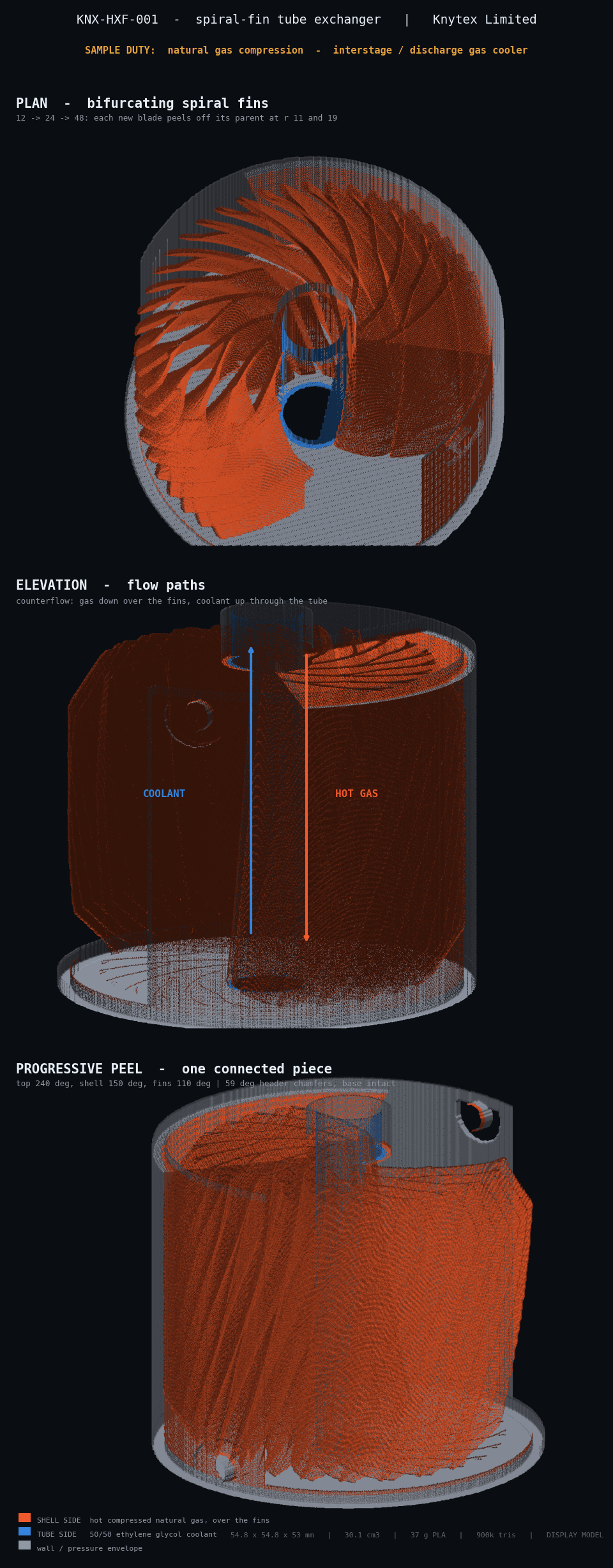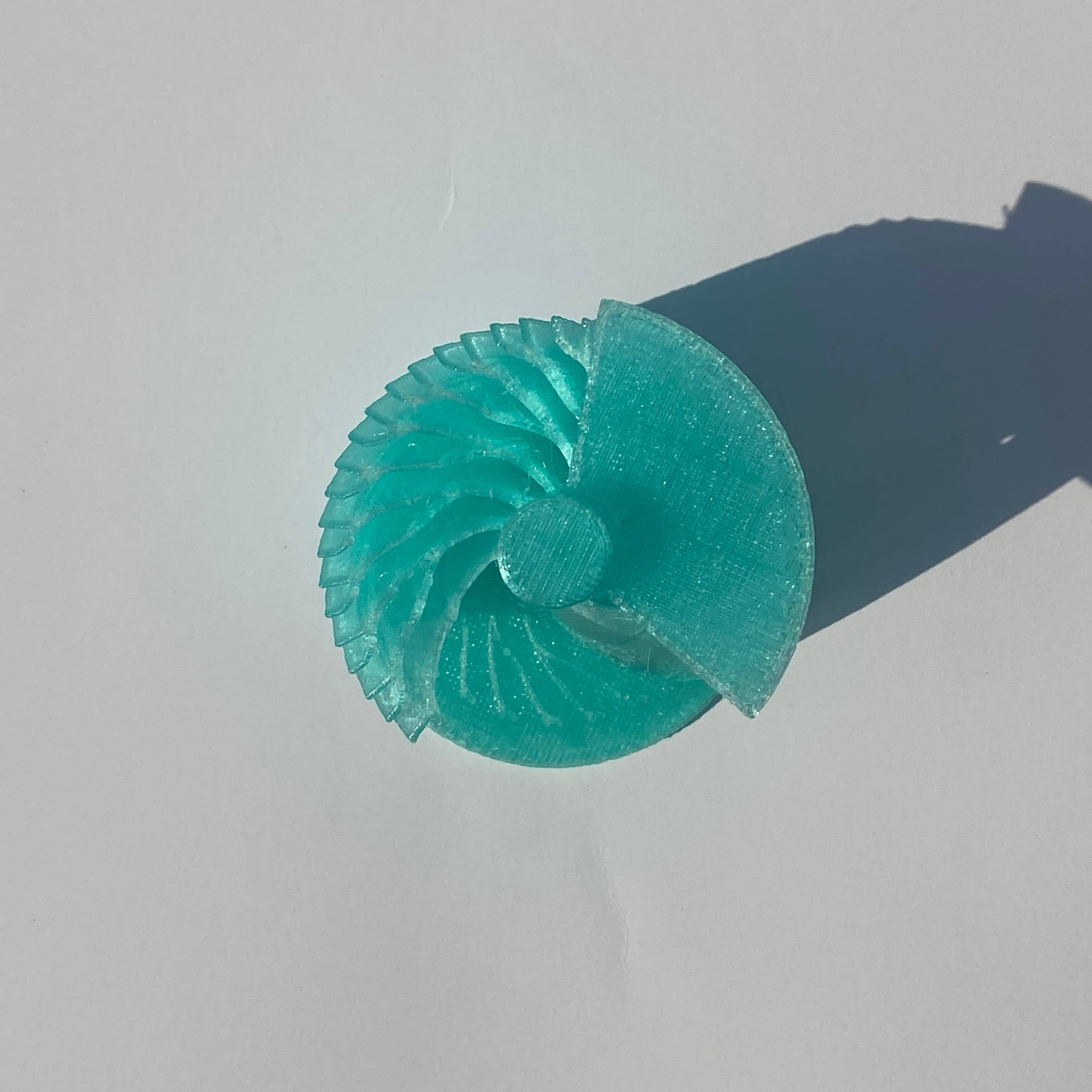
Current energy infrastructure projects for gas compression and oil extraction processing facilities are being duped into thinking their "modular systems and skids" are something new-age. It has become an industry term that things are "skidded" and modular, but in reality it is much more a legacy system of oil and gas piping, spools, pressure instrumentation, and the like that make up these packages, now simply assisted by the advent of AI and better computer-automated design.
The real new age of modular skid packages is only just beginning. A conventional tube-and-fin heat exchanger, for example, is built from hundreds of discrete parts: individual tubes, stamped or wound fins pressed on one at a time, headers, baffles, and a web of welded or brazed joints holding it all together, arduously assembled largely by hand. Every joint is a potential leak path, and every part is a line item in the build schedule. Additive metal manufacturing changes the unit of construction entirely. Instead of assembling hundreds of pieces, the fin geometry, flow passages, and structure are grown as a single monolithic core, printed directly from the optimized shape rather than built up from stock tube and sheet. Fewer joints, fewer failure points, and a geometry that conventional tube-rolling and fin-stamping could never produce in the first place.
The piece pictured here is a polymer prototype, printed only to prove out the concept geometry, not the production material. It was generated using PicoGX, an open-source (Apache 2.0) kernel. The fin pattern solves a specific problem: laid out as a plain radial array, the gaps between fins grow wider the further out from the center you go, which chokes flow near the hub and starves it out toward the rim. This geometry splits each fin into two at set points along its radius, doubling the fin count exactly where the gaps would otherwise open up too wide, so the spacing between fins, and the heat transfer that spacing drives, stays roughly even all the way from the center to the outer wall. It is still the dawn of this idea, but consider the efficiency and savings on offer: let the computer do the designing, and you remove the bottleneck on CAD modelling, the bottleneck on procurement, and the supply-chain grief of sending parts out for shipping. An additively optimized design is built specifically for your application, and can be repaired just as easily with localized additive manufacturing, owner-owned and fully part of your own supply chain, not dependent on outside vendors.